Project accommodation for staff: how do you standardise accommodation within a company (SLA, accommodation rules and living standards)?
Project accommodation for staff should be standardised with the same rigour as work equipment, access passes and the business travel process. When HR and project management agree in advance on clear SLAs, accommodation rules and minimum standards for living comfort, day-to-day operations run smoothly on projects in Oulu, Kempele and Rovaniemi without the need for constant “firefighting”. This article sets out a practical model that Northern…

Voit jättää meille soittopyynnön
Jätä nimesi ja numerosi, niin soitamme takaisin saman päivän aikana.
Project accommodation for staff It is worth standardising this with the same rigour as work equipment, access passes and the business travel process. When HR and project management agree in advance on clear SLAs, accommodation rules and minimum standards of comfort, day-to-day operations run smoothly on projects in Oulu, Kempele and Rovaniemi without the need for constant “firefighting”. This article sets out a practical model that transforms accommodation booked through a partner such as Northern Apartments Oy into a predictable service – for both the employee and the company.
Project-based accommodation for staff: the standard starts with objectives and roles
Before drawing up an SLA or a set of rules, it is worth agreeing on what “successful accommodation” means for your company. Typically, the objectives are to balance cost control with the employee experience: reducing complaints, ensuring a peaceful working environment and rest, streamlining invoicing, and preventing misuse (such as accommodation bookings being “diverted” for private use). Once the target state is clear, it is easier to roll out the standard across multiple locations.
A best practice is to define roles across three levels: (1) HR is responsible for policies and the employee experience, (2) project management is responsible for timetables, headcounts and changes, and (3) the accommodation partner delivers the agreed service level. If accommodation booking is left to a “first come, first served” model, it can easily lead to overlapping bookings, unclear check-in arrangements and a series of billing corrections. The idea behind the standard is to make the right way of doing things the easiest way.
Roles and decision-making authority Once the decision-making process has been outlined, accommodation arrangements continue even when things get busy.
HR set out minimum standards of comfort (e.g. privacy, workspace, cleanliness) and house rules.
Project Management submits forecasts (start date, duration, personnel, changes) and approves amendments.
Procurement/Finance aligns the billing structure, cost centres and reporting.
Accommodation partner commits to the SLA, communication and the controlled handover of keys and door codes.
When creating a standard for several locations, it is also worth noting the location-specific constraints: for example, the location of the site, public transport links and parking requirements in Oulu, the focus on the airport in Kempele, or seasonal fluctuations in Rovaniemi. In this way, the “same standard” works even though the locations and availability vary.
SLA for project-based accommodation: everyday life measured by service levels
An SLA (Service Level Agreement) turns accommodation into a service, not just a “flat”. HR and project management should include in the SLA the points that typically cause the most friction: response times, check-in, handling of faults, cleaning standards, and how changes (extensions, shortening of stays, changes of occupants) are handled. Once the measurable criteria have been agreed, complaints decrease and employees feel that the company is taking care of the basic day-to-day matters.
A good SLA also takes communication into account: who receives key/code details, how the information is protected, and what to do if an employee arrives late. It is also important to agree on what the service includes as standard (for example, Wi-Fi, basic furnishings, bed linen) and what constitutes an additional service. It is advisable to base this on general practices and contractual terms relating to accommodation; for example, from a contract law perspective, clear definitions reduce room for interpretation, and the basic logic of consumer and service contracts can be understood at a general level, for example service agreement through a description of the matter.
Once the SLA has been drawn up, project accommodation is no longer a matter of constant adjustment – but rather a predictable part of the project’s delivery capability.
If your company already has a process in place for bookings and invoicing, it is worth integrating the SLA into that process: who places the order, how the confirmation is documented, and in which system the information is stored. For an operator such as Northern Apartments Oy, a clear booking and SLA model also helps with the allocation of properties: the right flat to the right team, at the right time.
SLA minimums: what’s worth spelling out
An SLA that is too long will go unread; one that is too short will leave gaps. A workable model is “minimum requirements + exceptions”: the minimum requirements always apply, and exceptions are agreed on a case-by-case basis depending on the specific characteristics of the project (e.g. night-time arrivals, site requirements, the peak season in Rovaniemi).
| Sub-area | What is being measured? | Recommendation for implementation |
|---|---|---|
| Check-in and access to the flat | Success rate and clarity of instructions | Instructions to be provided by the day of arrival at the latest; a backup channel for late arrivals |
| Fault situations | Response time and repair time | Urgent issues (heating/water/locks) to be prioritised; status update to be provided within the agreed timeframe |
| Cleanliness and maintenance | The standard and frequency of cleaning | Agreed basic cleaning + additional cleaning requests at a clear price |
| Changes and follow-ups | How are extensions/reductions handled? | Deadline for changes and impact on price/availability noted |
Housing rules: reduce problems, increase consistency
House rules are not about “keeping tabs on people”, but about risk management and living together harmoniously. When the team is accommodated at several locations along the Oulu–Kempele–Rovaniemi corridor, the recurring issues are often the same: disturbance of the peace, smoking, pets without prior agreement, visitors, parking and waste disposal. A one-page appendix entitled “House Rules and Practices”, which is provided to the employee before arrival, saves time for both the employee and the accommodation provider.
It is good practice to divide the rules into three categories: (1) rules relating to the housing association and safety (mandatory), (2) the accommodation partner’s policies (keys, cleaning, reporting faults) and (3) the company’s own rules (expenses, guests, additional services). From the company’s perspective, the disciplinary process is also crucial: what action is taken if rules are repeatedly breached, and who discusses the matter with the employee. This ensures that the accommodation partner does not have to take on the “role of a line manager”.
The content of the house rules that actually helps prevent complaints The aim is to make the rules clear and easy to follow.
Quiet and a peaceful working environment Clearly state the quiet hours and remind guests that the accommodation is intended for rest and relaxation.
Visitors and overnight stays Agree in advance whether visitors are permitted and on what terms (security, insurance, handing over keys).
Smoking and pets Make the line transparent and direct any deviations to pre-processing.
Cleanliness and waste Please explain what basic cleaning involves and what an employee is expected to do on a day-to-day basis.
When the house rules are linked to the company’s internal guidelines and the accommodation partner’s terms and conditions, the result is a comprehensive framework that remains consistent even when staff change. From Northern Apartments Oy’s perspective, this results in smoother check-in and check-out days and fewer instances of “mystery cleaning”, as expectations are the same for everyone.
A brief note
If you already have a booking and invoicing process in place, add one more step to it: “Terms and conditions of tenancy accepted” before handing over the key details. This reduces the scope for misinterpretation and speeds up the resolution of any issues.
Find out about our accommodation terms and conditions and policies
Housing comfort standards: what employees really need
A comfortable living environment is not a “luxury”, but a prerequisite for productivity and safety. When an employee sleeps poorly or is unable to carry out basic tasks (planning work shifts, attending remote meetings, washing, cooking), it quickly becomes apparent in the project: in the form of absences, errors and staff turnover. That is why HR should define a minimum standard that applies to all sites – and ensure this is also communicated to the contractor.
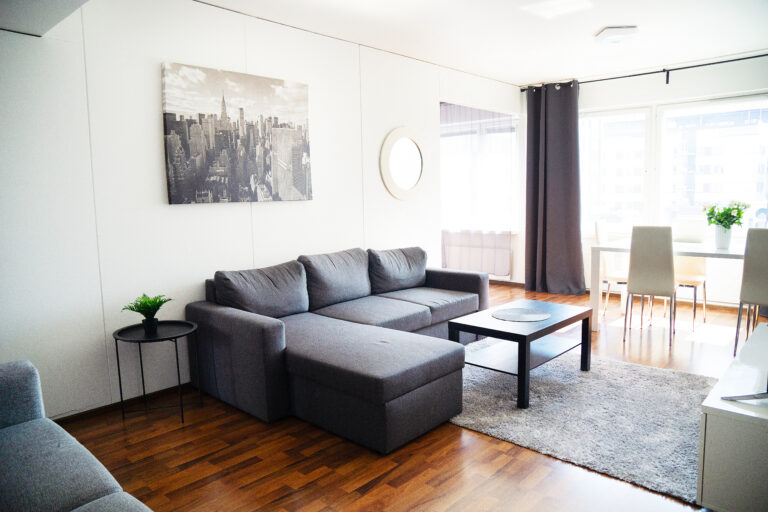
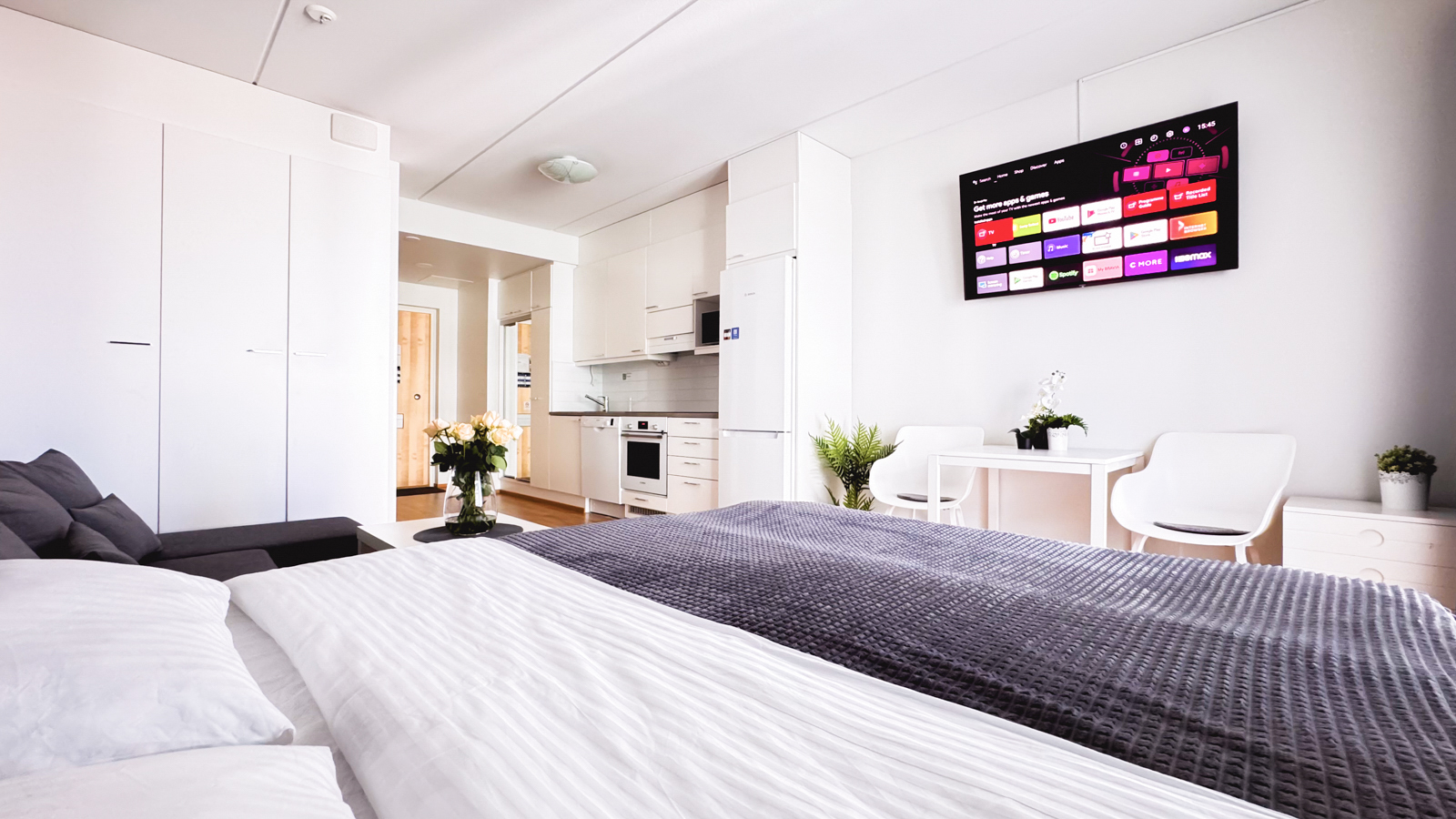
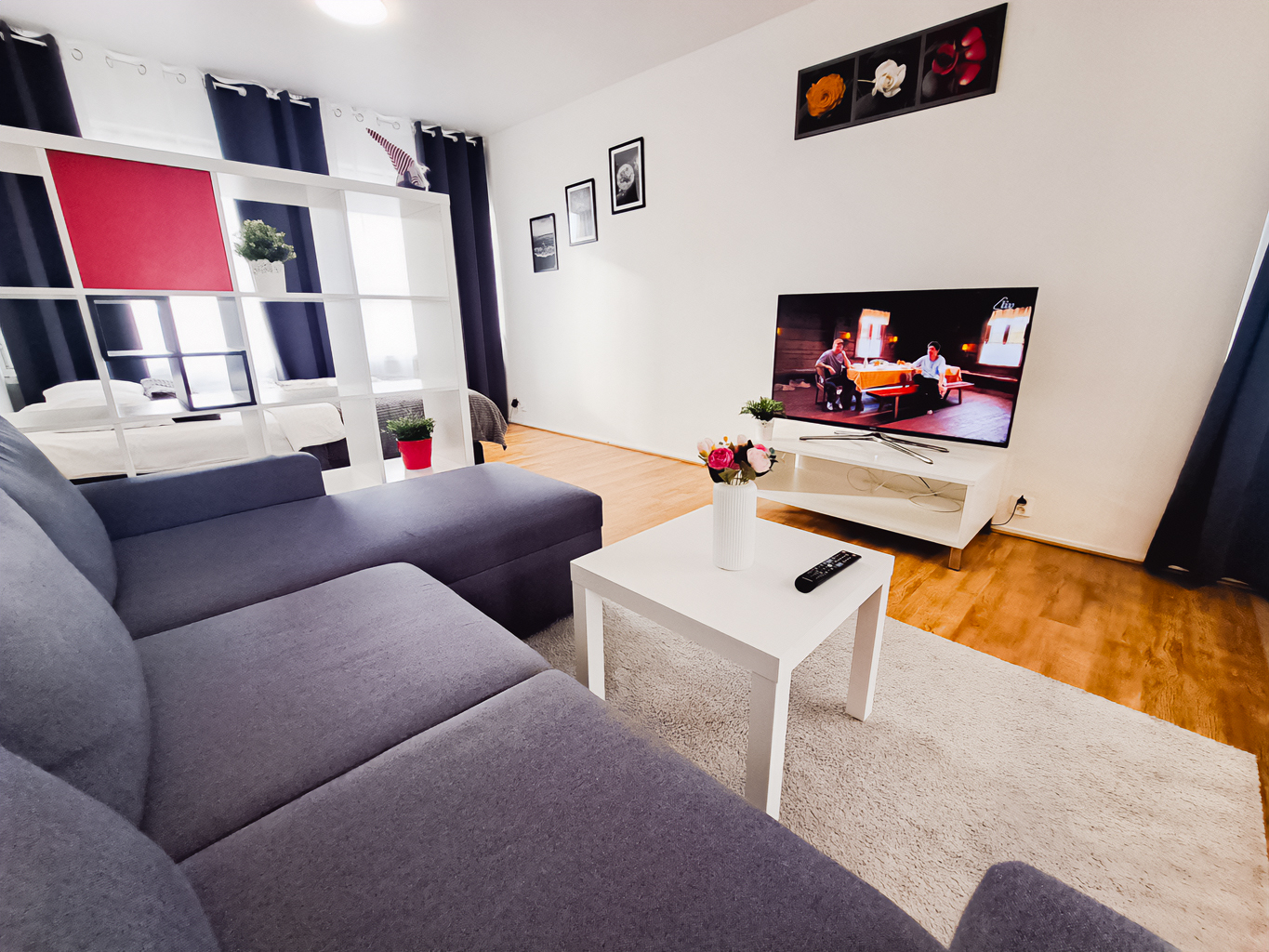
It is advisable to distinguish between “must-haves” and “nice-to-haves”. The ‘must-have’ category might include, for example, reliable Wi-Fi, effective heating, the option to darken the room, a basic ergonomic workspace, and clear instructions (on equipment, waste disposal and parking). The ‘nice to have’ category might include, for example, a sauna, a gym or a location right in the city centre, but these should be approached flexibly depending on the project’s budget and the site’s location.

The duration of the project determines the priorities in terms of convenience
For short stays (1–7 nights), ease of access, clear instructions and location are key. For medium-term stays (2–6 weeks), everyday routines become important: doing the washing, a regular cleaning routine, a functional kitchen and a workspace. For long-term stays (2–6+ months), the focus is on privacy, storage space, acoustics and the fact that the flat is a place where you can “keep living” without constant stress.
If you wish to explore the aspects of employees’ peace of mind and well-being at work in greater depth, it is worth incorporating this into your standards and induction training. You can find some useful further reading on the subject on the Northern Apartments Oy website: Remote working and secondment in Oulu: how does a furnished flat help you to work in peace and maintain your well-being?.
Putting the standard into practice: communication, induction and day-to-day support
The standard will not work if it remains simply a PDF on the intranet. The onboarding process should be structured as a “before arrival – on the day of arrival – during the stay – on the day of departure” pathway. Before arrival, the employee receives a concise information pack: address, access details, contact persons, house rules and instructions for dealing with faults. On the day of arrival, it is ensured that the employee can gain access and knows where to seek help. During their stay, a weekly routine (cleaning, laundry, maintenance) reduces uncertainty. On the day of departure, return instructions and a checklist help to prevent additional charges.
In projects involving several locations, the “single-point-of-contact model” also works well: staff report accommodation-related matters to a single point of contact (e.g. the HR or project office service channel), and from there the matter is directed to the appropriate department. This reduces the likelihood of the accommodation partner receiving conflicting messages from different people, which can delay a resolution. At the same time, HR gains visibility into recurring issues and is able to develop standard procedures.
Induction pack for employees Once this is standard practice, there are fewer questions and the experience improves right from the very first night.
Directions Door code/key collection, parking and clear instructions on “what to do if I can’t get in”.
Everyday tips Wi-Fi, appliances, waste disposal, laundry and a simple cleaning routine.
Contact information Who helps with urgent faults, who handles invoicing, and when will we receive a reply?.
Rules of Residence A concise list + a link to more detailed guidance, so that everyone is on the same page.
Once you have a standard in place, it is worth ensuring it is “vendor-independent”: the same framework will work even if the property or accommodation partner changes. In the case of Northern Apartments Oy, however, the standard can be quickly put into practice, as booking, contract and invoicing procedures are consistent. For background information and as a model, it is useful for HR to read: Booking a furnished flat for a company: contract, invoicing and practical guidelines.
Metrics and continuous improvement: this is how the standard remains relevant
When applying the accommodation standard in day-to-day operations, it is worth introducing a few simple metrics that HR and project management can monitor on a monthly basis. The aim is not to create a cumbersome reporting system, but to quickly identify any deviations: which site is receiving the most enquiries, for what reason, and what impact this has on day-to-day project operations. A monthly review of just 10–15 minutes is sufficient, provided the data has been compiled sensibly.
Another important element is the feedback loop for staff: a simple “what worked / what didn’t” survey following a stay. By distinguishing between service level issues (SLA), house rules (behaviour and coexistence) and living comfort (facilities, location) in the feedback, development measures can be targeted effectively. This improves the employee experience, reduces costs and increases predictability – particularly in situations where projects move between Oulu, Kempele and Rovaniemi.
Once the standard has been drawn up, I recommend appointing an “accommodation owner” (HR or the project office) to maintain the document, update the supplier-specific appendices and ensure that new staff are familiar with the template. Northern Apartments Oy serves businesses from its base in Oulu (Hallituskatu 19 A 1, 90100 Oulu) and often helps to ensure that accommodation becomes a well-managed whole: the same standard of service, clear communication and smooth day-to-day operations – from one project to the next.
If you wish to compare options or justify the purchase of the standard, you may also wish to read the background information on the differences between a furnished flat and a hotel: Furnished flat vs. hotel in Oulu. When information is shared, it is easier to adopt and implement a standard.
Would you like a consistent standard of accommodation for your projects?
Northern Apartments Oy helps to establish a clear framework for project accommodation: service standards, procedures and a smooth daily routine in different locations.