
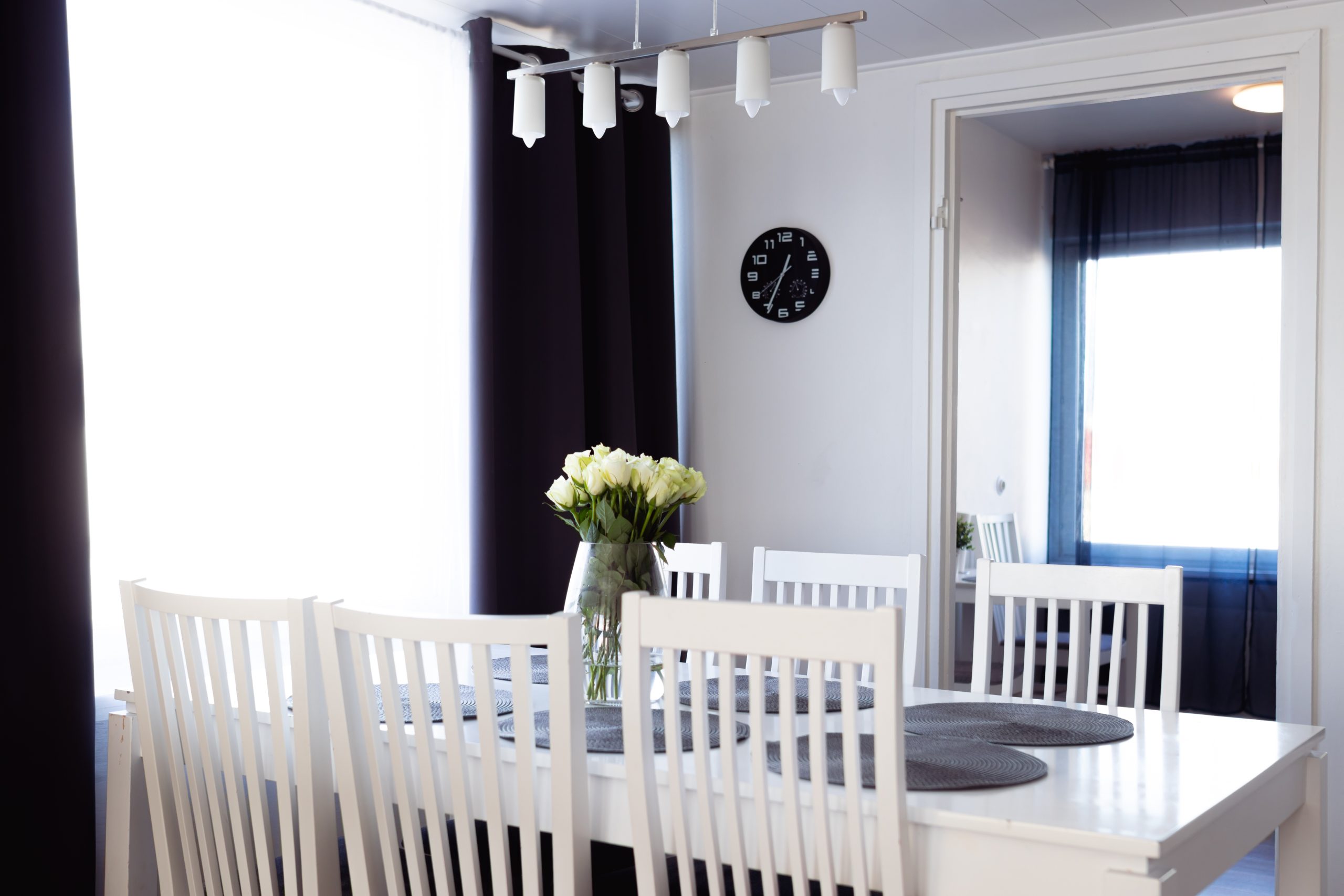
Furnished accommodation for businesses along the Kemi–Oulu–Kajaani corridor: how can you organise staff secondments to multiple locations with a single partner?
Arranging furnished accommodation for a company along the Kemi–Oulu–Kajaani corridor runs much more smoothly when accommodation logistics are organised according to the same set of rules and through a single partner. As projects and work sites move from one location to another, individual bookings, differing practices and fragmented invoicing quickly start to eat into the time of both HR and line managers – and this becomes apparent…

Voit jättää meille soittopyynnön
Jätä nimesi ja numerosi, niin soitamme takaisin saman päivän aikana.
Furnished accommodation for businesses Things run much more smoothly along the Kemi–Oulu–Kajaani corridor when accommodation logistics are organised according to the same set of rules and through a single partner. As projects and work sites move from one location to another, individual bookings, differing practices and fragmented invoicing quickly start to eat into the time of both HR and line managers – and ultimately have an impact on employees’ day-to-day lives as well.
This guide explains how a company can plan business accommodation as a whole in Northern Finland (e.g. Kemi, Oulu, Kajaani, Kokkola and the municipalities along the central corridor), how to standardise procedures, and the benefits of a single-supplier model. Northern Apartments Oy (Hallituskatu 19 A 1, 90100 Oulu) is used as an example; the company provides furnished accommodation for businesses in several locations.
Why is it worth arranging furnished accommodation for a company through a single partner?
As the team moves from Kemi to Oulu and on to Kajaani as the project progresses, the biggest risk regarding accommodation is not simply availability – but the variation in procedures. At one location, keys are collected from the office; at another, a code lock is used; at one, the invoice is sent to the employee; at another, to the company; at one, cleaning is included; at another, it must be booked separately. With a single-partner model, these differences are minimised, and the company is provided with a single process that can be taught to both employees and line managers.
Furnished flats emphasise everyday routines: your own kitchen, laundry facilities and the chance to live “just like at home”, even when your work location changes. This reduces stress and makes it easier to maintain a regular routine, which is particularly important during longer assignments and shift work. Furthermore, you can agree in advance with a single partner on matters such as check-in times, maintenance visits and weekly cleaning, thereby minimising any surprises.
If you’d like to explore booking and contract models in more depth from a business perspective, Northern Apartments’ guide makes for a good read: Booking a furnished flat for a company: contract, invoicing and practical guidelines.
The practical benefits of the single-partner model When accommodation is provided in several locations, even small standardisations can have a big impact.
One point of contact Faster changes, fewer email threads and a clear division of responsibilities.
Consistent invoicing The same structure applies to cost centres, reference numbers and reporting, even when the location changes.
Standard house rules Rules regarding quiet hours, smoking, pets and visitors are set out in a consistent manner.
A Predictable Everyday Life Staff always know what’s available in the flat and how the check-in process works.
There is also a regional reality to consider: distances are long and timetables are subject to change. Travelling is part of everyday life in Northern Ostrobothnia and Kainuu, and a sensible accommodation plan supports work efficiency. You can check basic facts and locations for these regions reliably, for example, at Wikipedia: Northern Finland …from the website, but what matters most to the company is its own secondment model, not the tourist attractions.
Once accommodation has been standardised with a single partner, the management of business travel shifts from “individual bookings” to a predictable process.
Furnished accommodation for businesses: plan business trip logistics as a route, not as individual nights’ stay
Many organisations still make accommodation decisions on a “week-by-week” basis, even though the actual need is often for periods of 2–12 weeks and the work location may change in the middle of it all. A better approach is to plan the assignment as a route: which locations is the team likely to visit (Kemi–Oulu–Kajaani–Kokkola), what notice period applies to changes, and what sort of accommodation capacity is required (apartments for 1–2 people or 3–6 people).
When booking logistics are structured as a routing model, a company can agree with a partner on, for example, “flexible capacity”: a certain number of flats form the primary booking pool, and additional capacity is made available as and when required. This is particularly useful in installation and maintenance projects, where schedules depend on deliveries, the weather or the progress of work phases.
The fragmented nature of the assignments is exacerbated by the fact that some team members arrive at different times and others leave earlier. It is therefore important to agree on procedures with your partner: how late arrivals are handled, how keys are returned, how any faults are reported, and who approves changes. At Northern Apartments“ properties, the focus is on clarity for corporate clients: the furnished flats are intended for everyday living, not ”just for an overnight stay’.
Checklist for planning a deployment route These questions will help you ensure that your accommodation supports work across several locations.
Duration and range Is it for 3–5 nights a week, or a continuous period of 4–10 weeks?
Team size Should people be accommodated alone, in pairs or in groups in the same flat (peace and quiet vs. cost)?
Location requirements Do you need parking, good road access to the site, or a quiet area for shift work?
Cleaning and laundry Shall we arrange for weekly cleaning and linen, or will the employee take care of some of it themselves?
Standardise the rules: sign-in, tidying up, a peaceful working environment and “what to do if…”
When a company has several assignments running at the same time, the greatest time-saving comes from the employee receiving the same set of instructions every time. The instructions should include at least the following: how to check in, parking, Wi-Fi, cleaning procedures, any maintenance visits, and what to do in the event of an accident or a problem with keys. This way, the supervisor does not have to “reinvent the wheel” for every single case.
Cleanliness is a particular concern with project accommodation, as the stays are longer and people actually live in the flat. Agree in advance whether weekly cleaning is included in the service, how rubbish and recycling are handled, and who is responsible for arranging any additional cleaning. There is a useful article on this topic: Cleanliness and weekly cleaning of a furnished flat: what should a business client agree on in advance?.
A brief note
If you have regular journeys along the Oulu–Vaala–Kajaani route, it’s worth checking in advance what sort of accommodation is available and how the booking process works when you’re in a hurry.
The rules for furnished accommodation: a one-page summary
A practical approach is to produce a “one-page guide to temporary accommodation”: a single PDF or intranet page that applies in Kemi, Oulu, Kajaani and Kokkola. As the partner is the same, the guide remains virtually unchanged, and updates are rarely needed. This also contributes to health and safety: staff know what to do if a problem arises at the accommodation late in the evening.
A single invoicing and reporting model: cost centres, changes and transparency
When there are multiple assignments, invoicing management is often the point at which the process either succeeds or fails. The single-partner model makes things easier, as you can agree on a single invoicing structure: cost centre, project, job number (if applicable) and agreed invoicing frequency (e.g. weekly or monthly). When the same structure is applied consistently regardless of location, the finance department receives comparable data and any discrepancies can be identified quickly.
Change management should be agreed upon with the same clarity as invoicing. Typical changes include: an extension of one week, an earlier departure, a change of person, or a transfer of accommodation requirements to the next city. When a partner is familiar with the company’s practices, a change does not mean a new tender process or “starting from scratch”; instead, the same contract and the same principles continue to apply.
| Theme | One partner | Several journalists |
|---|---|---|
| Invoicing and reporting | Same format, easier to tailor to the project | Different formats, more manual work and a greater risk of errors |
| Situations involving change | Standard process (exchange/rollover/repayment) | Each supplier has its own terms and schedules |
| Employee experience | Standardised guidelines, less fiddling about | Varying practices, greater uncertainty |
| Forecasting availability | Option to join a booking pool and set up recurring bookings | More difficult to predict, fragmented capacity |
Kemi–Oulu–Kajaani–Kokkola: practical arrangements when the team changes location
When a company operates along the Kemi–Oulu–Kajaani axis, secondment is not just a matter of “choosing a location” but part of everyday life on the move. For this reason, it is worth considering two aspects: 1) the company’s internal operating model and 2) the partner’s ability to provide services across multiple locations. Northern Apartments Oy offers furnished flats in Oulu and in several neighbouring areas and locations (including Vaala, Utajärvi, Muhos, Kiiminki, Kemi, Kajaani and Kokkola), ensuring that the process remains the same even if the address changes.
In practice, a good approach is to appoint a “secondment coordinator” within the company (an HR representative, assistant or supervisor) and agree on a clear point of contact with the partner organisation. When an employee changes location, the coordinator notifies the partner of the change in a single message, stating the person’s name, dates, location, any special requirements (e.g. parking for a van) and the invoicing reference. This allows the employee to focus on their work rather than on making bookings.
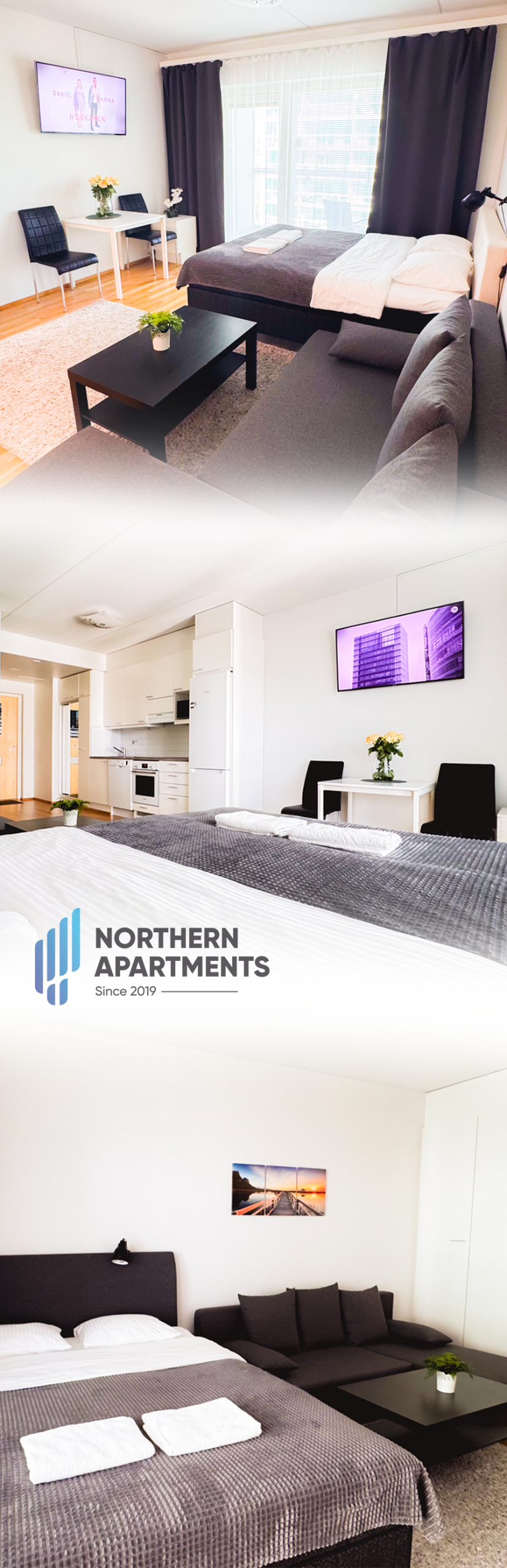
Furnished accommodation for businesses and employees’ everyday lives: small things, big impact
When the assignment changes, the employee’s workload inevitably increases: new routes, a new site, new timetables. That is why accommodation should be as “familiar” an experience as possible. In a furnished flat, everyday life is made easier by having your own kitchen, sufficient space for work clothes and the chance to relax in peace. This is also a question of productivity: a well-rested worker makes fewer mistakes and is better able to cope over long periods.
If you wish to set up a standardised project accommodation model for your company (SLA approach, house rules, minimum facilities), please also take a look at the article: Project accommodation for staff: how do you standardise accommodation within a company?.
When the team relocates, make sure these procedures are in place This will help you minimise delays and unnecessary costs.
Standardised check-in The same arrival procedure and instructions apply at all locations.
Contingency plan What should we do if the job takes longer than expected and the departure is postponed or the destination changes during the week?
Vehicles and parking It is advisable to make arrangements in advance for a van, tools and, if necessary, electric vehicle charging.
Contact form Who should we contact in the evenings and at weekends if there’s a problem with the flat?
How to get started with Northern Apartments Oy: a practical guide for businesses
When the aim is to implement a standardised model across several locations, it is advisable to proceed in three stages: needs assessment, agreeing on the basic principles, and piloting. The needs assessment involves listing typical locations (Kemi, Oulu, Kajaani, Kokkola), average durations and team sizes. The basic principles cover check-in, invoicing, cleaning and changes. The pilot phase is carried out as a single project, during which the guidelines are refined.
Northern Apartments Oy is based in Oulu and offers short- and long-term accommodation in furnished flats to businesses and travellers. When a partner is familiar with how your company operates, future bookings are streamlined: the same booking process, the same invoicing procedure and familiar terms and conditions. It’s easy to get in touch, even if you just need a rough estimate of availability and suitable areas to start with.
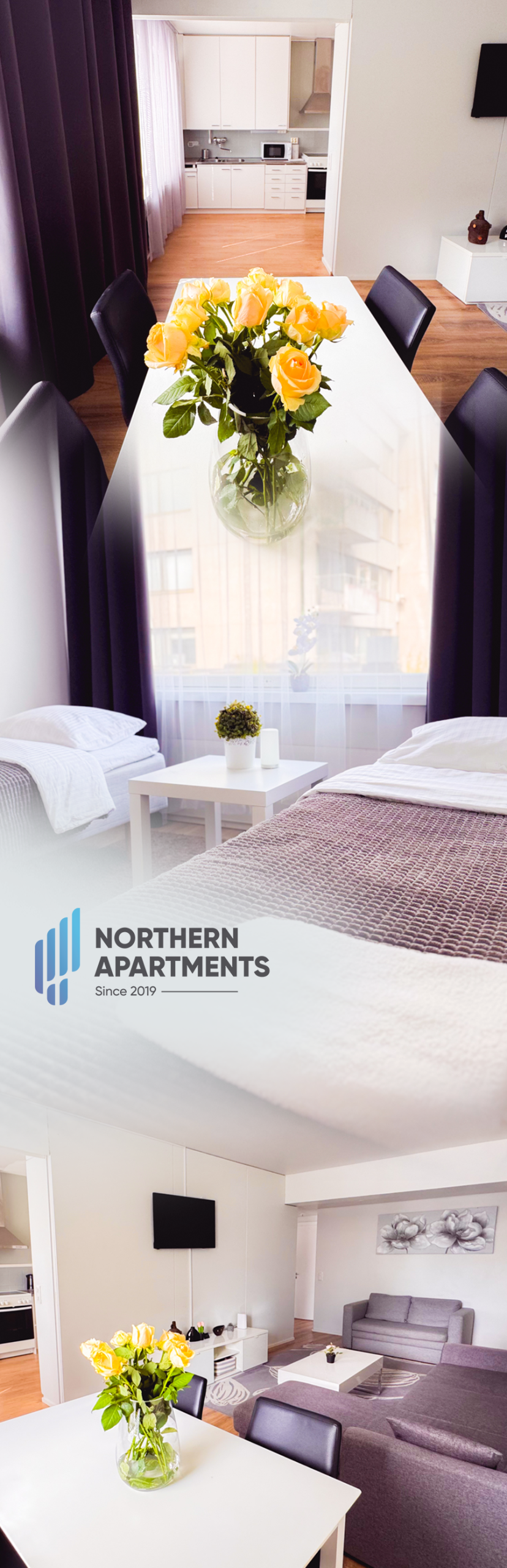
In conclusion: when you set up temporary accommodation as a standardised model (rather than for individual nights), you save time, reduce errors and improve the employee experience. Particularly along the Kemi–Oulu–Kajaani corridor, having a single partner provides continuity in a situation where work sites and schedules rarely remain completely fixed.
Would you like a single-occupancy room for your work placement?
Let us know the locations and team sizes, and we’ll help you establish clear procedures and predictable accommodation arrangements in Northern Finland.